
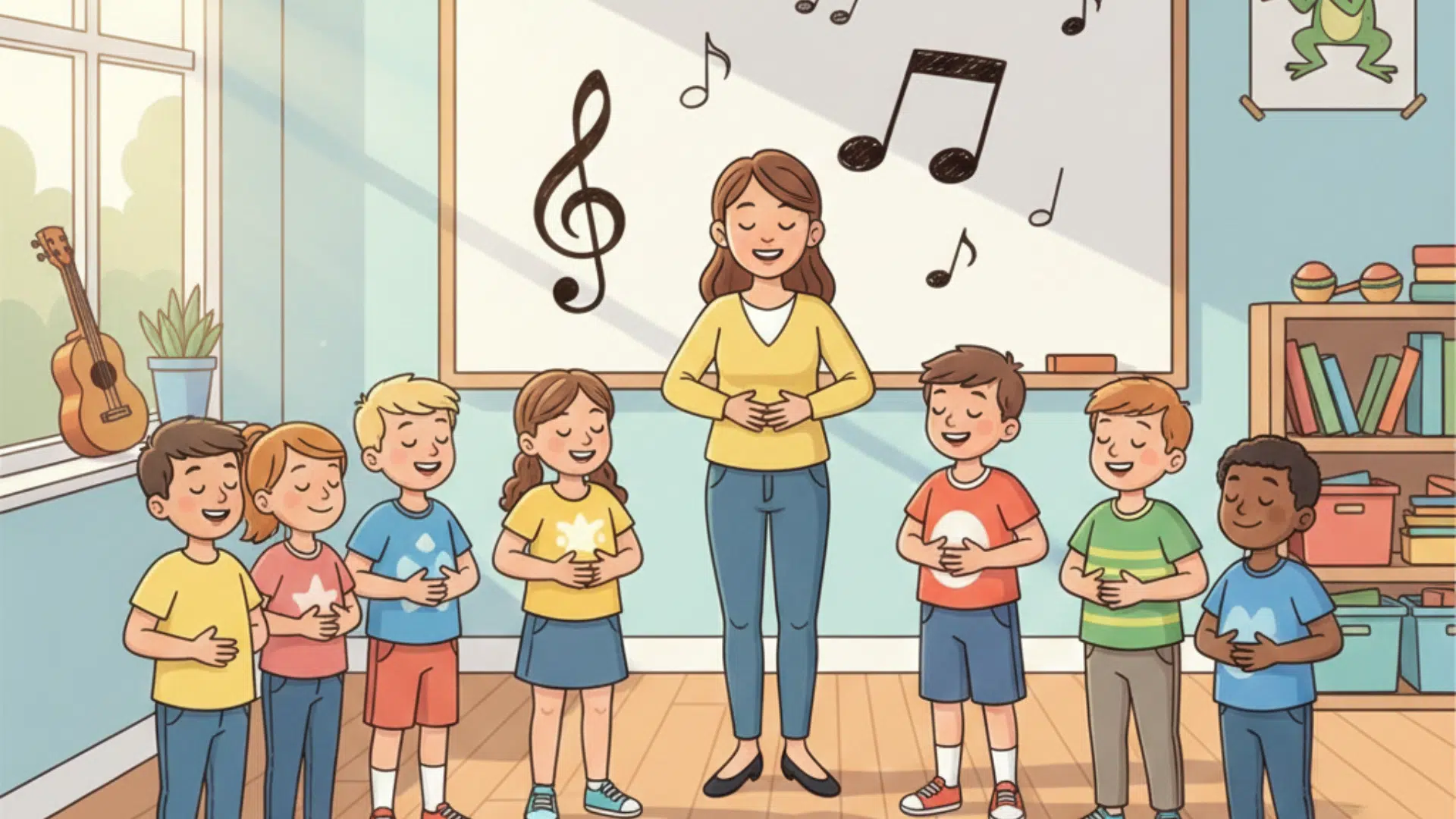
Kids love to sing, shout, and talk. But did you know their voices need warming up just like muscles before sports? Vocal Warm Ups for Kids are simple exercises that get young voices ready for singing, speaking, or performing. Think of them as stretches for the voice box.
Many children jump straight into singing without preparing their vocal cords. This can lead to strain or tiredness. A quick warm-up routine takes just 5-10 minutes.
It helps kids hit notes better and speak more clearly. These exercises also build confidence and make singing more fun.
Teachers, parents, and choir instructors can use these warm-ups at home or in class. Starting each day with vocal practice creates healthy habits. Ready voices mean happy singers. Let’s look at easy warm-ups that work for any child.
What Are Vocal Warm-Ups for Kids?
Vocal warm-ups are short exercises that prepare the voice for use. They wake up the muscles in the throat, mouth, and chest. Just like stretching before running, warming up prevents injury and improves performance.
For children, these exercises serve multiple purposes. They teach proper breathing techniques. They help kids find their natural vocal range. They improve articulation and tone quality. Most importantly, they make singing safer and more comfortable.
Regular warm-ups teach kids how to use their voices without pushing too hard. This builds a foundation for healthy singing habits that last a lifetime.
What Does a Safe Warm-Up Sound Like for Kids?
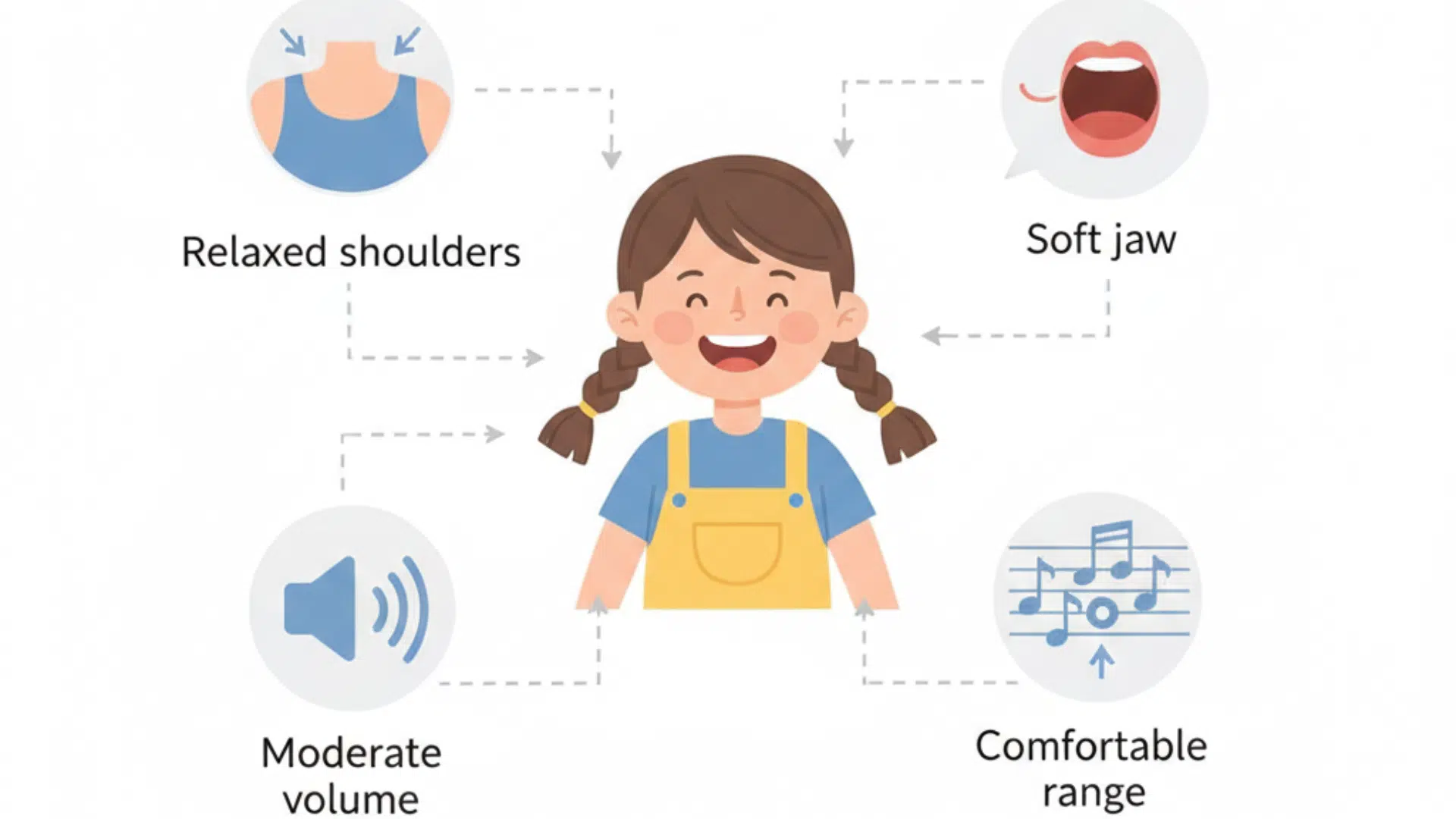
Safety comes first with young voices. A safe warm-up never feels painful or scratchy. Kids should sound clear, not breathy or pushed. The volume should be moderate, never shouting or whispering.
Listen for smooth transitions between notes. Cracks or breaks mean the voice is being pushed too far. Young singers should stay in their comfortable middle range most of the time. Avoid asking kids to sing extremely high or low notes repeatedly.
Watch for tension signs. Raised shoulders, clenched jaws, or scrunched faces mean a child is working too hard. Remind them to stay relaxed. The voice works best when the body is calm and supported.
Duration matters too. Young children tire quickly. Five to ten minutes is plenty. Older kids in the choir can handle longer sessions, but still need breaks.
Full 10-Minute Vocal Warm-Up Plan for Kids (Music Class or Choir)
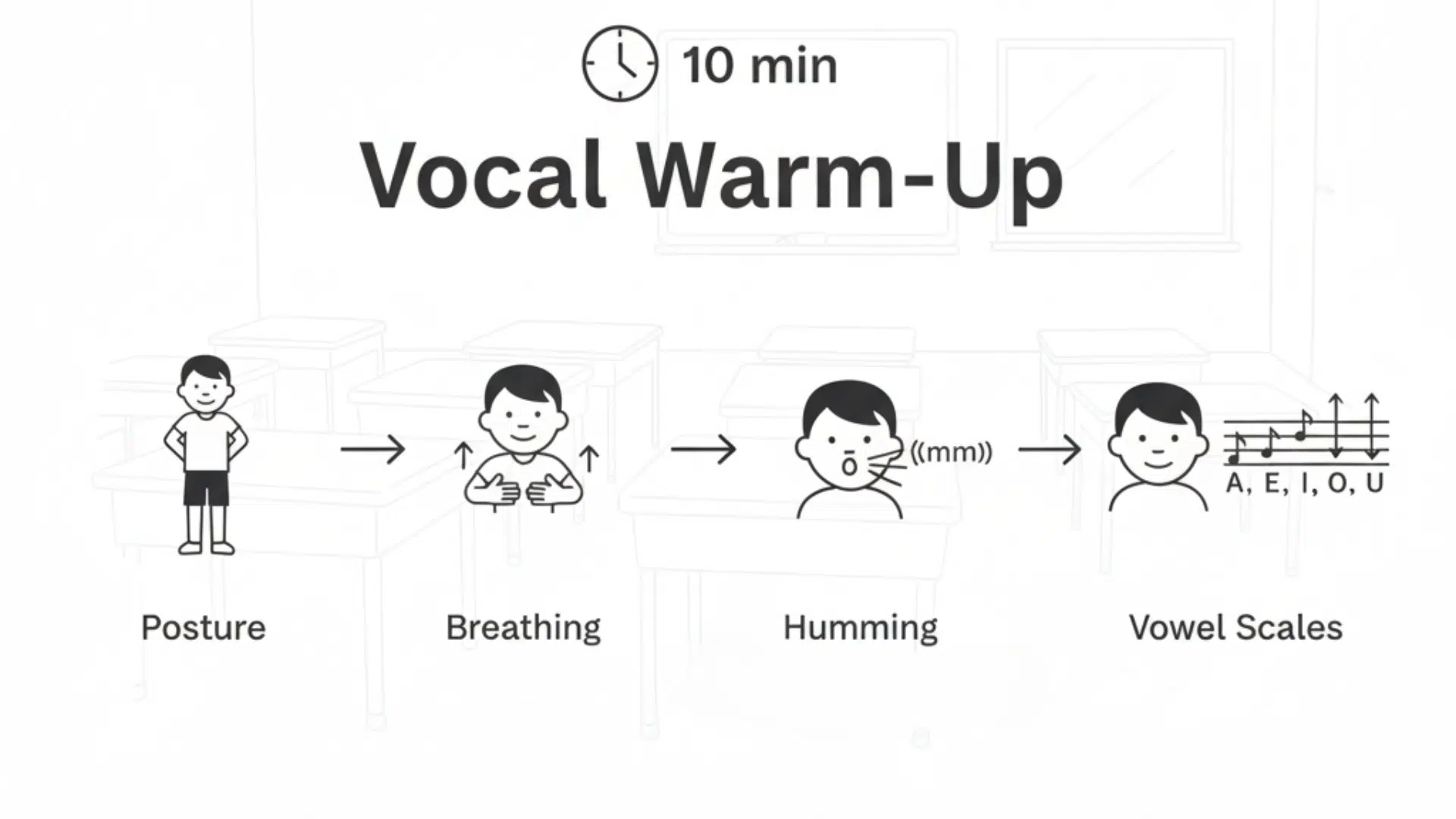
This extended routine works well for structured music classes or choir rehearsals. It builds skills progressively.
Minute 1–2: Posture + Focus Cue
Everyone stands in a circle or in choir formation. Check that feet are flat, knees soft, and spine straight but not rigid. Imagine a string pulling gently from the top of the head. Take three deep breaths together as a group. This creates unity and readiness.
Minute 3–4: Breath Control (Short + Long Exhales)
Breathe in for four counts. Release on a “shh” sound for eight counts. Repeat twice. Then breathe in for four and release on “shh” for twelve counts. This extends breath capacity and teaches control. Kids learn to manage their air supply while singing longer phrases.
Minute 5–6: Resonance (Hums, “ng,” Lip Trills)
Start with gentle humming on a middle pitch. Feel the vibration in the nose and face. Then try “ng” sounds (like the end of “sing”). Hold each for five seconds. Finish with lip trills—blow air through relaxed lips so they flutter. These exercises build resonance and vocal cord coordination.
Minute 7–8: Pitch and Listening (Echo Patterns)
The teacher sings a simple pattern: three notes, like “do-me-sol.” Kids echo it back. Try different patterns using “loo” or “lah.” This trains pitch accuracy and listening skills. Keep patterns short and within a comfortable range.
Minute 9–10: Vowels + Simple Scales for Tone
Sing a five-note scale (do-re-me-fa-sol-fa-me-re-do) on different vowel sounds: “ah,” “ay,” “ee,” “oh,” “oo.” Focus on keeping the throat open and the tone consistent. This polishes vocal quality and prepares voices for actual songs.
Vocal Warm-Ups for Kids by Goal
Different goals require different exercises. Choose warm-ups based on what skills need attention.
1. Breathing Warm-Ups
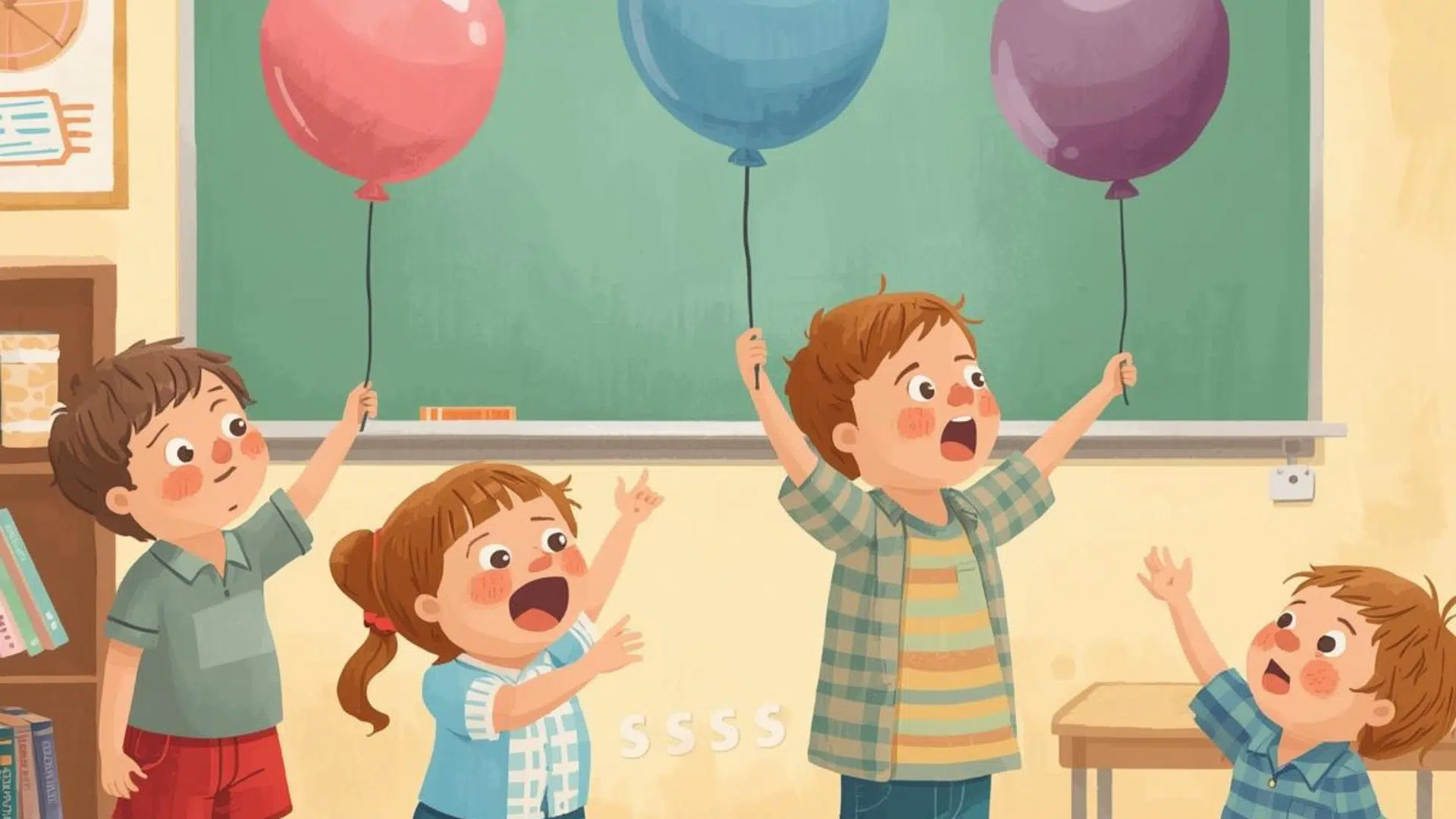
Balloon breaths: Breathe in slowly, raising arms overhead. Breathe out on “sss” while lowering arms.
Candle blows: Pretend to blow out birthday candles with controlled puffs.
Counting exhales: Breathe in, then count out loud as far as possible on one breath. These exercises strengthen breath support.
2. Gentle Vocal Fold Warm-Ups
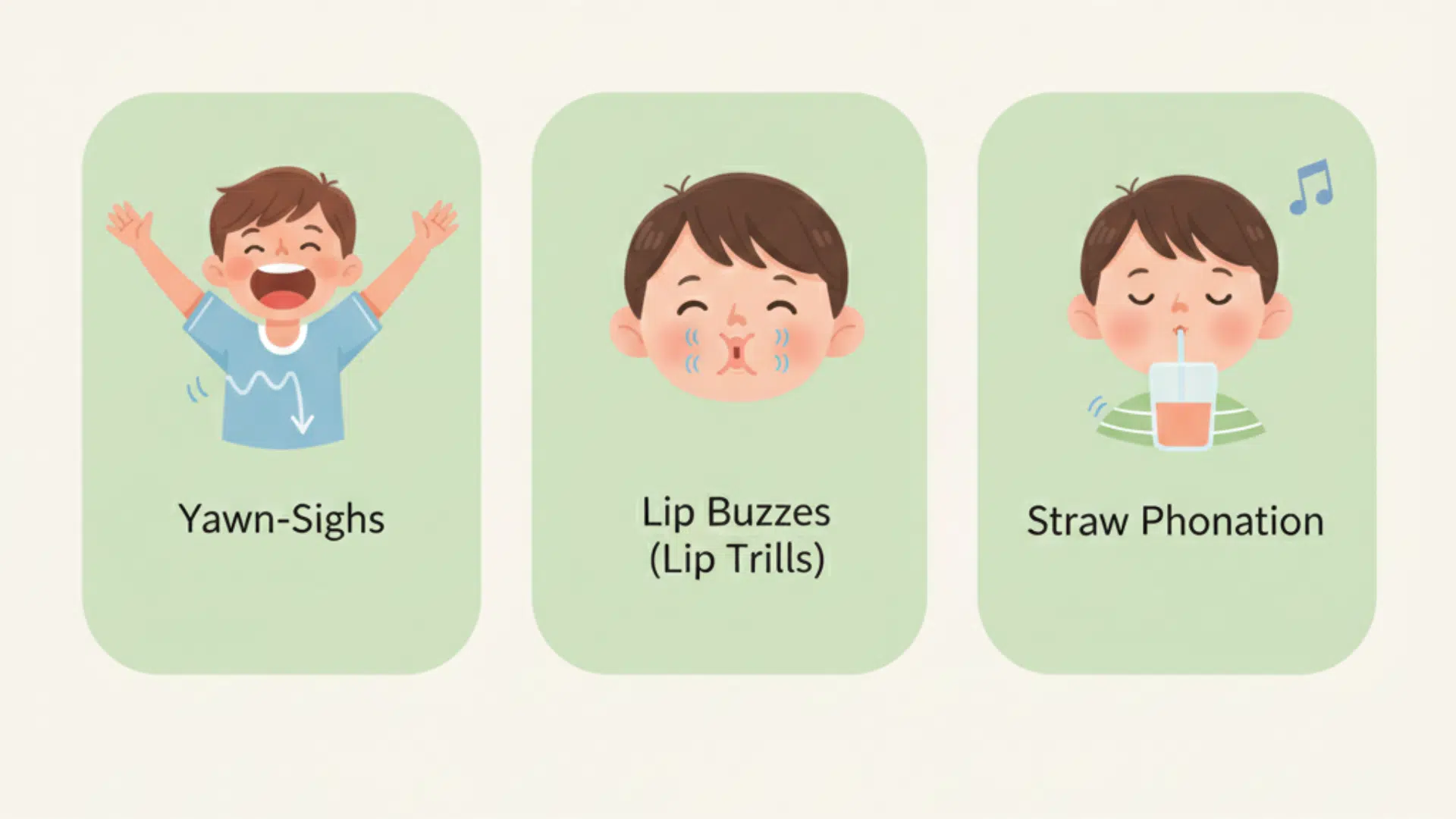
Yawn-sighs release tension. Lip buzzes on single notes get cords vibrating safely. Straw phonation (humming through a straw) is excellent for warming up without strain. These exercises should always feel easy and comfortable.
3. Range Warm-Ups
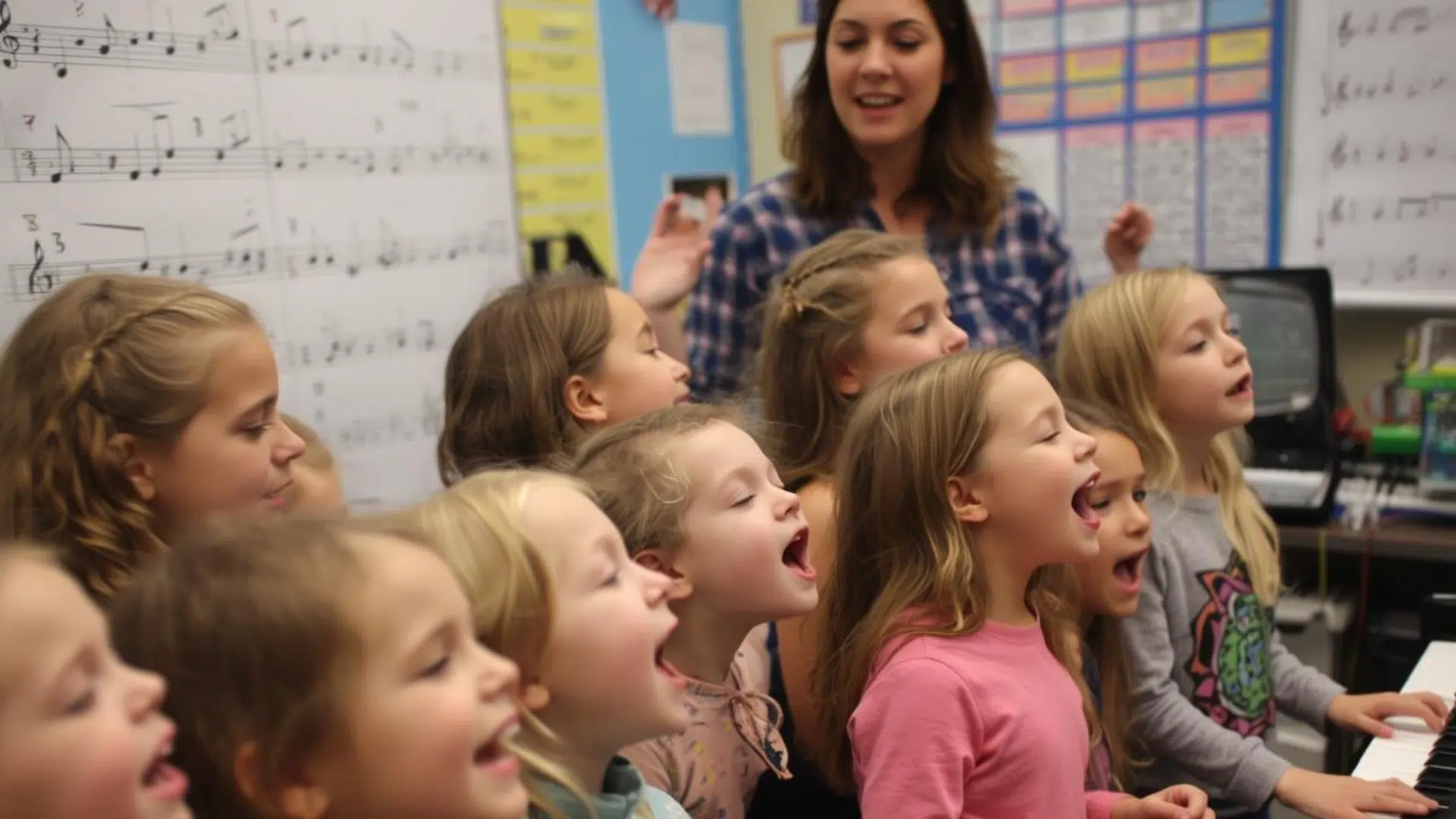
Siren sounds move through the whole range gently. Sliding on “wee” or “woo” helps voices stretch without forcing. Five-note scales that move up and down by half steps gradually extend range. Never push kids to sing higher or lower than they feel natural.
4. Pitch and Listening Warm-Ups (Choir-Friendly)
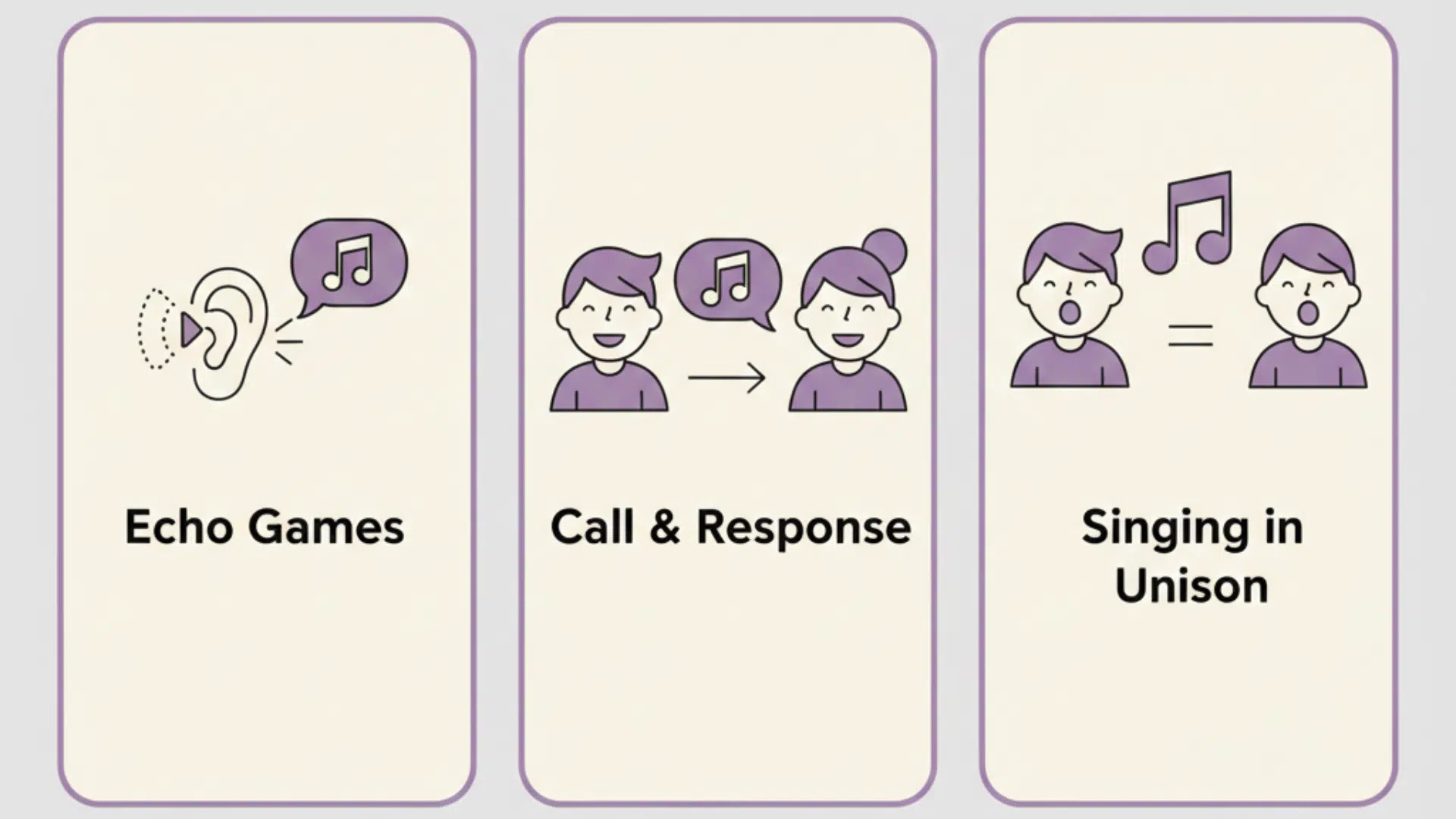
Echo games build pitch matching. Call and response patterns teach interval recognition. Singing in unison on single pitches helps kids match the group sound. These skills are essential for choir singing.
5. Diction Warm-Ups
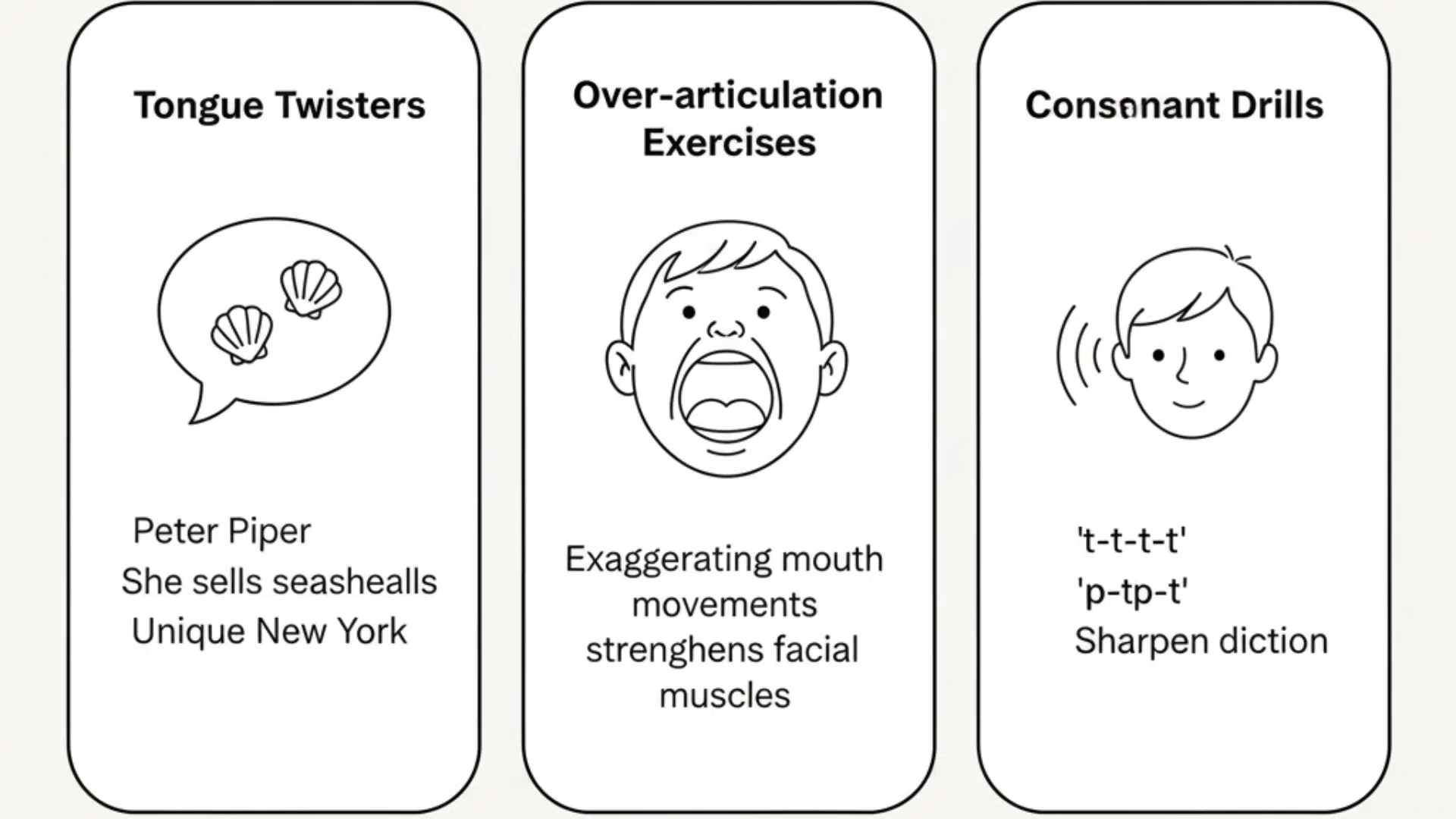
Tongue twisters improve clarity: “Peter Piper,” “She sells seashells,” “Unique New York.” Over-articulation exercises (exaggerating mouth movements) strengthen facial muscles. Consonant drills like “t-t-t-t” or “p-p-p-p” sharpen diction.
Choir Warm-Ups for Kids (Group Rehearsal Format)

Group settings need special consideration. Start with unison exercises so everyone sings together. This builds blend and listening skills.
Use rounds and canons for more advanced groups. Simple songs like “Row, Row, Row Your Boat” work perfectly. This teaches part-singing while warming up.
Include breathing exercises where everyone breathes at the same time. This creates ensemble unity. Try having the choir hum a chord together, then switch to vowels.
Physical warm-ups help, too. The whole group can do shoulder rolls, gentle stretches, or even march in place while humming. Movement releases nervous energy and improves focus.
End with a familiar, easy song that the choir knows well. This builds confidence and gets everyone singing together with a good tone.
Vocal Warm-Ups for Kids by Age Group
Different ages need different approaches. Tailor exercises to developmental stages.
1. Ages 4–6 (Short Attention, More Play)
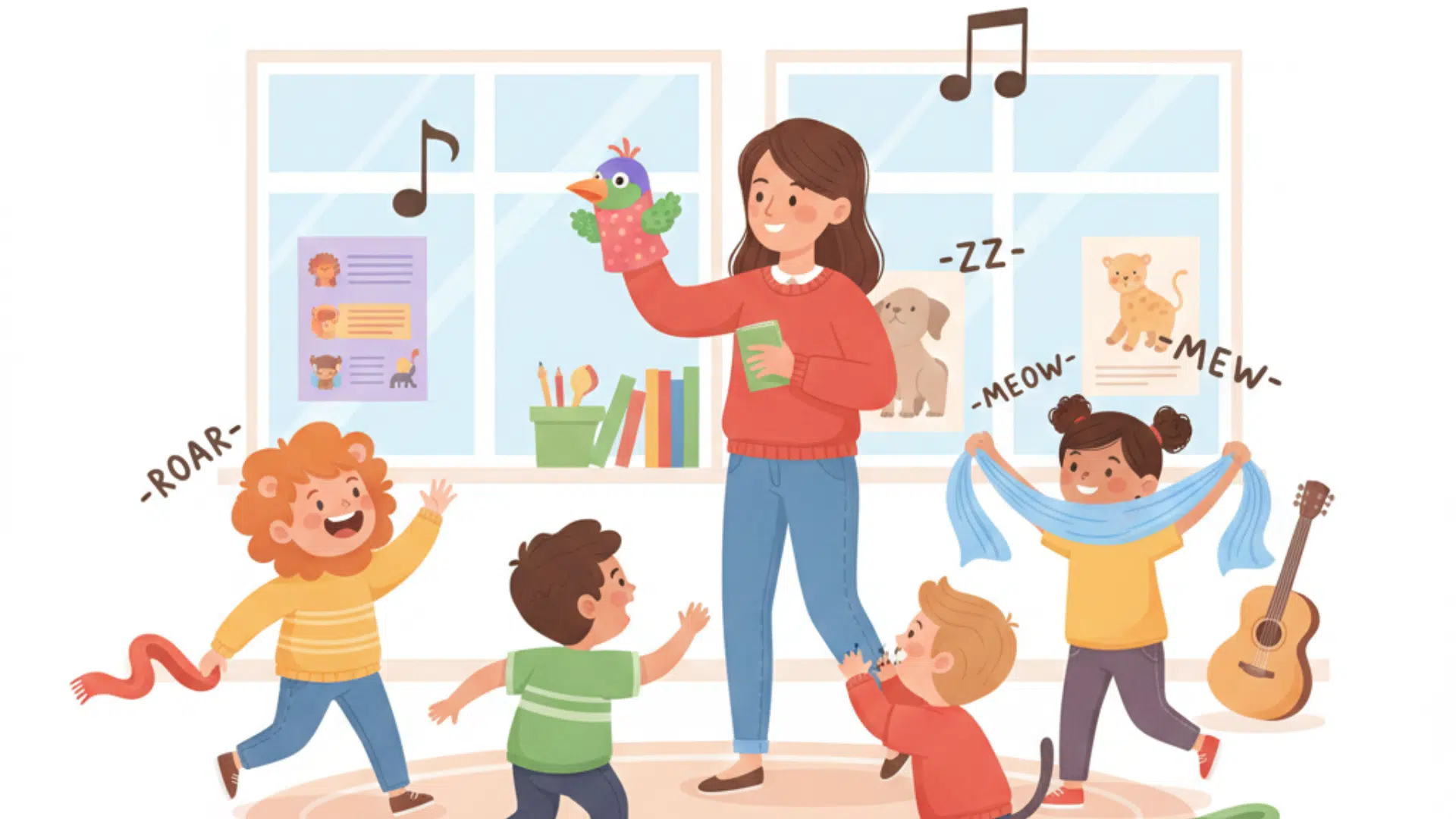
Keep it fun and physical. Animal sounds work great: roar like a lion, meow like a cat, buzz like a bee. Move while making sounds, stomp like elephants, flutter like butterflies.
Sessions should last only three to five minutes. Use lots of variety to keep attention. Props like scarves or puppets make it playful.
2. Ages 7–10 (Skill Building)
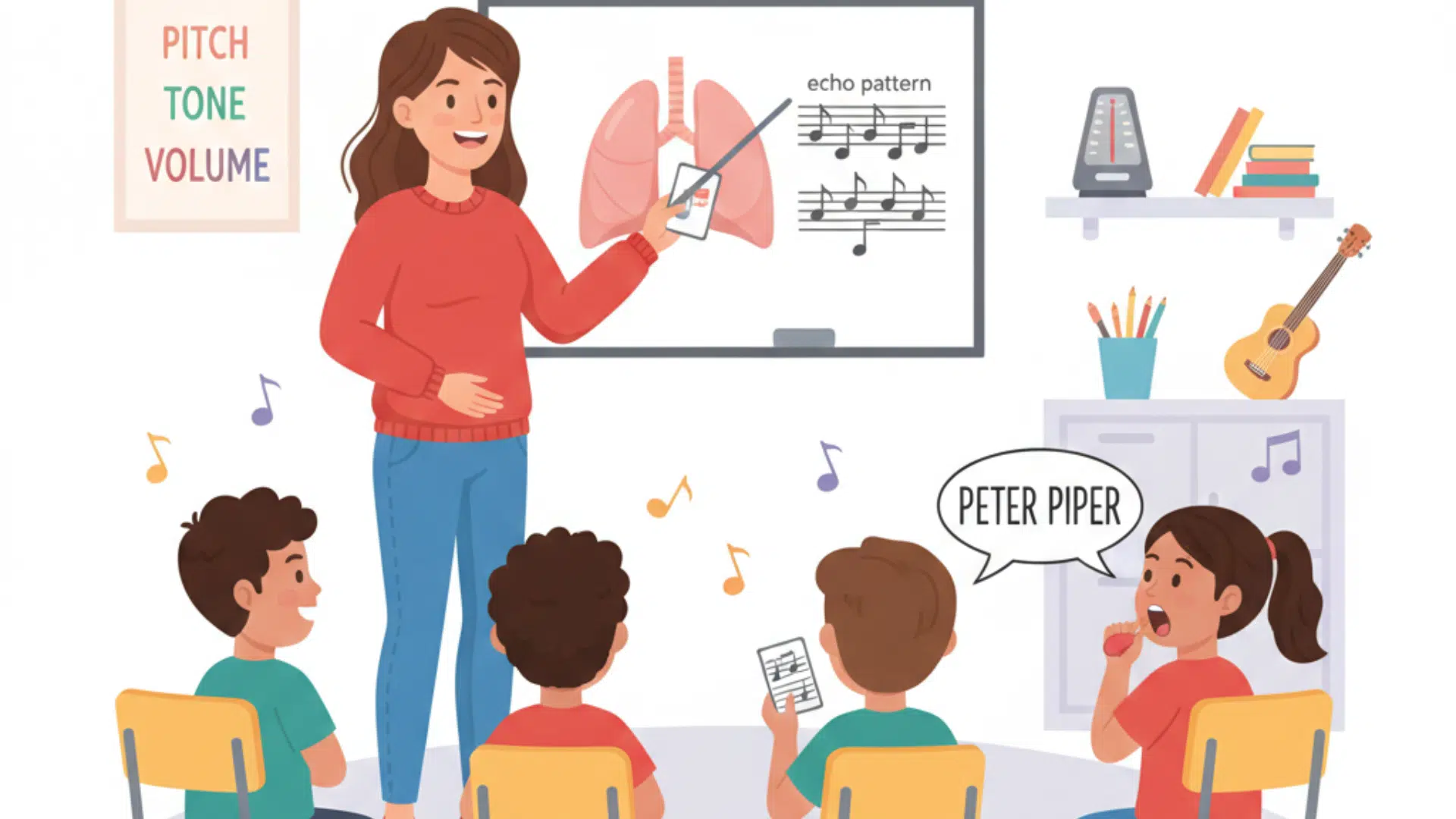
This age can follow instructions better. Introduce proper breathing technique with clear explanations. Use five to eight-minute routines.
Include echo patterns and simple scales. Kids this age enjoy challenges like tongue twisters. They can start learning musical terms like pitch, tone, and volume.
3. Ages 11–14 (Changing Voices)
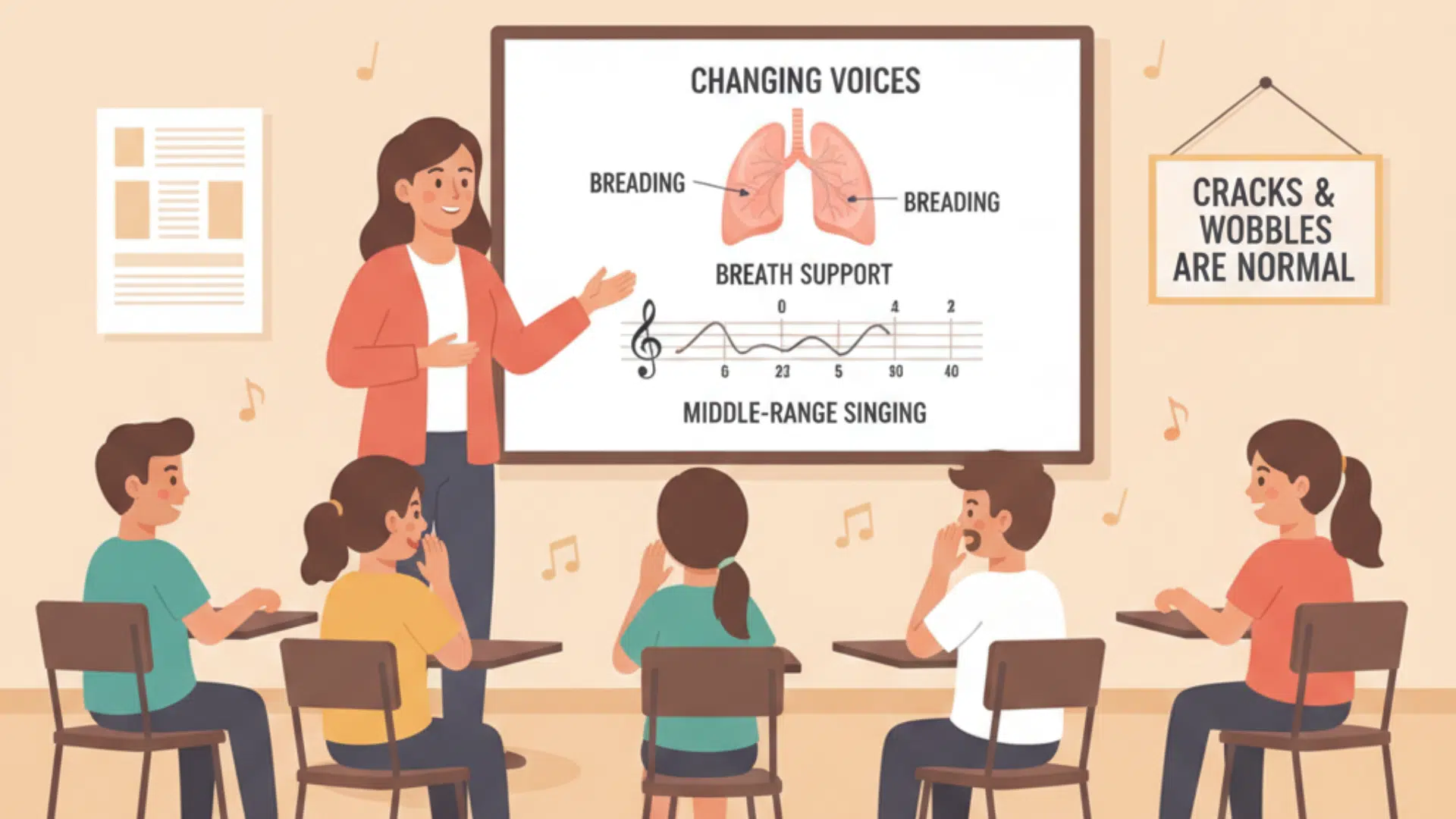
Voices change during puberty, especially for boys. Be patient and supportive during this time. Ranges may shift week to week. Focus on comfortable middle-range singing.
Avoid pushing for extremely high notes. Give extra breathing exercises to support developing voices. Ten-minute warm-ups work well. Acknowledge that cracks and wobbles are normal and temporary.
Common Mistakes to Avoid
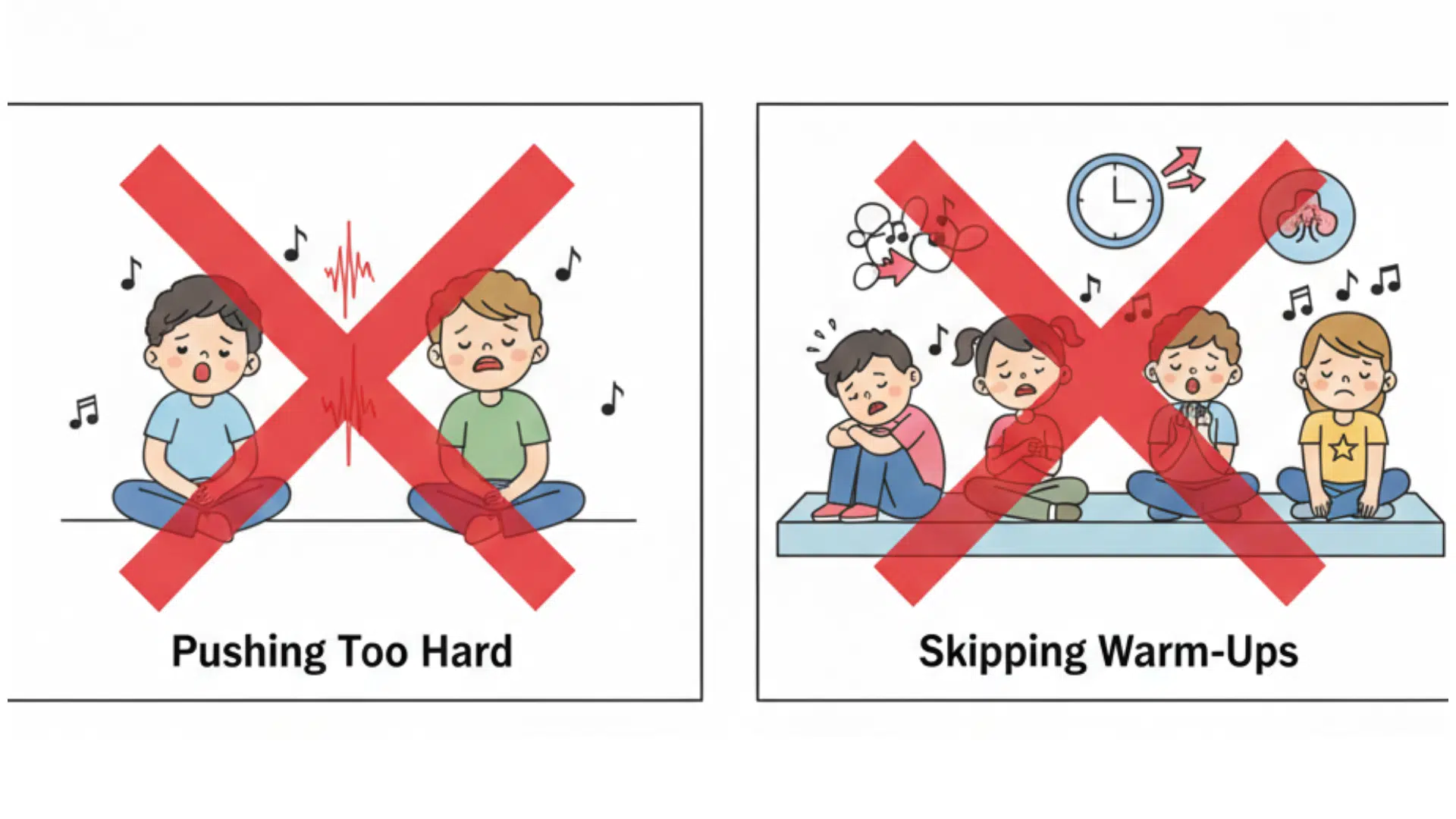
- Pushing too hard is the biggest mistake. Kids should never strain or feel pain. If a child’s voice sounds forced or tight, stop and reset.
- Skipping warm-ups leads to poor performance and possible injury. Even when time is short, do at least three minutes of preparation.
- Using an inappropriate range is harmful. Stay in the middle range for most exercises. Extreme high or low notes should be brief and gentle.
- Boring routines lose attention. Mix up exercises so kids stay engaged. Variety prevents boredom and works different vocal skills.
- Ignoring posture affects sound quality. Always check that kids are standing or sitting correctly before starting.
Teacher Tips for Running Vocal Warm Ups for Kids
Model everything yourself. Sing and demonstrate each exercise so kids know exactly what to do. Keep explanations brief; long talks lose attention.
Use imagery like “Sing like you’re sliding down a slide” or “breathe like you’re smelling cookies” to make concepts clear.
Watch the group carefully and adjust the difficulty based on what you observe. Make it routine by doing warm-ups the same way each time. Praise effort, not just results.
Stay playful but focused so kids understand they’re building real skills.
Vocal Warm Ups for Kids create healthy singing habits from an early age. If you have five minutes or fifteen, regular practice makes a real difference. Soon, your students or children will have strong, confident voices ready for any song.
Conclusion
Vocal Warm Ups for Kids help children sing and speak with better control while protecting young voices from strain.
A short routine that includes posture, breathing, gentle sounds, pitch practice, and clear words can make a noticeable difference over time.
Keep warm-ups light and comfortable, and avoid pushing high or low notes. With regular practice at home, in class, or in choir, kids build steady habits that support healthy singing.
What’s one warm-up you’ll try this week: breathing, humming, sirens, or tongue twisters? Share your go-to exercise in the comments.
Frequently Asked Questions
What are Some Easy Vocal Warm-Ups?
Easy vocal warmups include humming, lip trills, gentle sirens, breathing exercises, and simple scales on vowel sounds like “ah” or “oo.”
What are Some Warm-Up Activities for Kids?
Warm-up activities for kids include animal sounds, body stretches, breathing games, tongue twisters, and playful echo patterns that combine movement with vocal practice.
How to Improve Kids’ Voices?
Improve kids’ voices through daily vocal warm-ups, proper breathing techniques, staying hydrated, avoiding shouting or straining, and practicing regularly in a comfortable range.