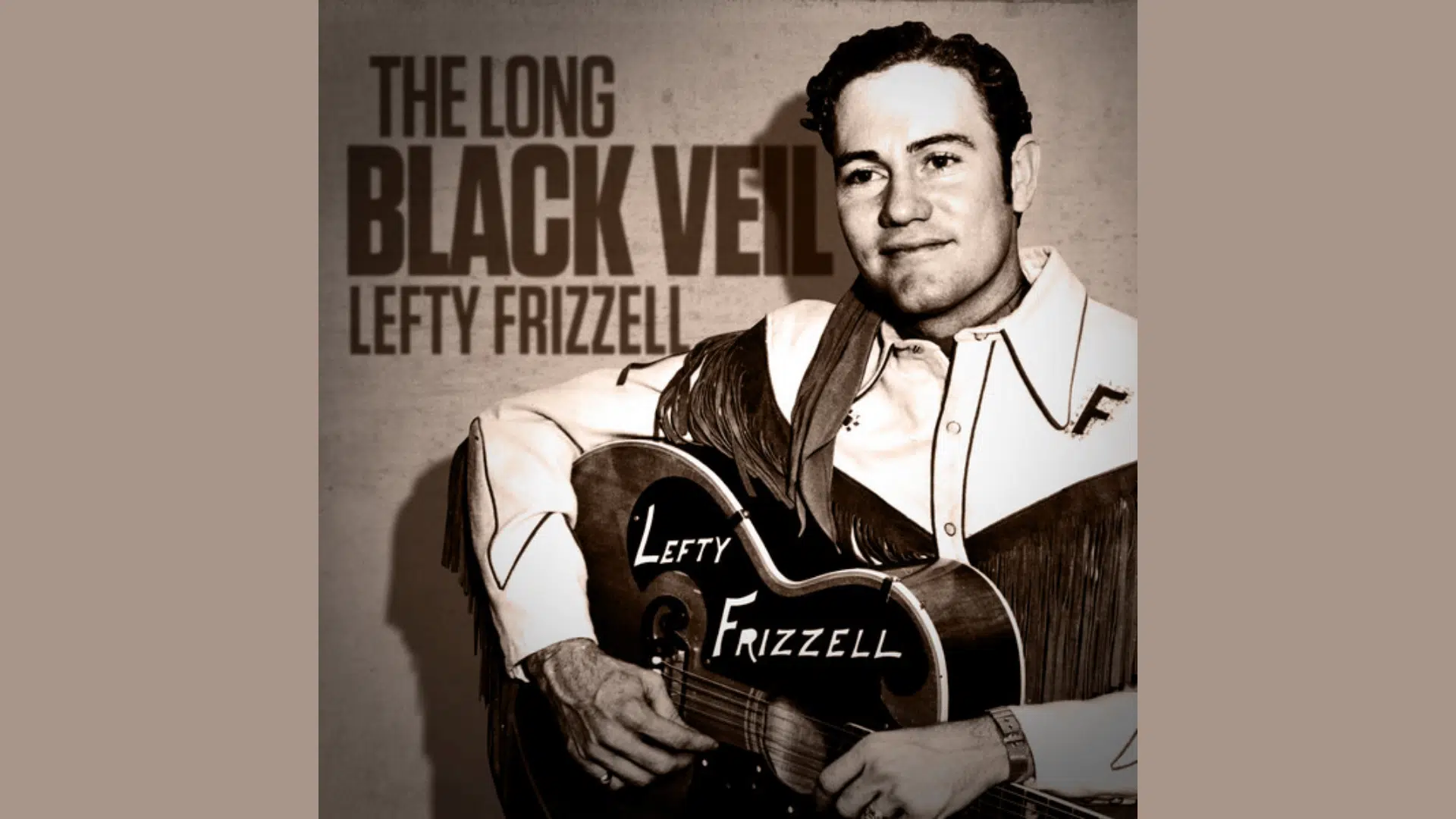
The long black veil lyrics tell one of country music’s darkest stories. Written in 1959 by Marijohn Wilkin and Danny Dill, this song is about a man who goes to his death rather than reveal a forbidden secret.
He’s accused of murder but won’t share his alibi because he was with his best friend’s wife. Lefty Frizzell first recorded it, reaching #6 on the country charts.
But the song became legendary through covers by Johnny Cash, Joan Baez, and The Band. The long black veil lyrics have captivated audiences for over 60 years, appearing in films, literature classes, and countless performances.
“long black veil” English Lyrics by Lefty Frizzell
[Verse 1]
Ten years ago, on a cold, dark night
There was someone killed ‘neath the town hall light
There were few at the scene, but they all agreed
That the slayer who ran looked a lot like me
[Verse 2]
The judge said, “Son what is your alibi?
If you were somewhere else, then you won’t have to die”
I spoke not a word, though it meant my life
For I had been in the arms of my best friend’s wife
[Chorus]
She walks these hills in a long black veil
She visits my grave when the night winds wail
Nobody knows, nobody sees
Nobody knows but me
[Verse 3]
The scaffold was high and eternity near
She stood in the crowd and shed not a tear
But sometimes at night when the cold wind moans
In a long black veil, she cries over my bones
[Chorus]
She walks these hills in a long black veil
She visits my grave when the night winds wail
Nobody knows, nobody sees
Nobody knows but me
[Refrain]
Nobody knows but me
Nobody knows but me
Song Credits
| Detail | Information |
|---|---|
| Song Title | Long Black Veil |
| Original Release Date | April 1959 |
| Original Artist | Lefty Frizzell |
| Album | Released as a single (not originally on an album). Later included on compilation albums. |
| Songwriters | Marijohn Wilkin and Danny Dill |
| Producer | Don Law |
| Label | Columbia Records |
| Genre | Country, Country Ballad |
Artist’s Discography
Lefty Frizzell was a groundbreaking country singer whose smooth, emotional vocal style shaped the sound of the genre in the 1950s. He produced classics like If You Have the Money, Always Late, and Long Black Veil. His influence continues through artists such as Merle Haggard, Willie Nelson, and George Jones.
1. Listen to Lefty (1952)
This early LP collected several of Frizzell’s hit singles rather than being a traditional studio album. It showcased his smooth, emotional vocal delivery that defined his early career. The album helped solidify him as one of the leading country voices of the era.
2. Songs of Jimmie Rodgers (1951)
A heartfelt tribute to Jimmie Rodgers, one of Lefty’s biggest influences. Frizzell covered Rodgers’ classics with his own smooth phrasing and distinctive style. The album highlighted his respect for early country roots during a period when his sound was evolving.
3. Sings the Songs of Jimmie Rodgers (1960)
A revised and expanded tribute album, revisiting the songs he recorded in 1959. The re-release introduced the material to a new generation and featured improved arrangements. It reinforced Lefty’s connection to the traditional country lineage.
4. The Sad Side of Love (1965)
This album showcased Lefty’s maturing tone, shifting toward deeper, more reflective themes. The songs explore heartbreak and emotional struggle, resonating with the country audience of the mid-60s. It remains one of his most expressive later-period releases.
5. Look What Thoughts Will Do (1997)
Although technically a 1997 compilation, it is often listed among his major album releases. It features a strong collection of earlier hits and fan favorites that helped reintroduce his work to new listeners. The album served as a reminder of his influence during a transitional era in country music.
Notable Singles
| Year | Song Title |
|---|---|
| 1950 | If You Have the Money, I Have the Time |
| 1950 | I Love You a Thousand Ways |
| 1951 | Always Late (With Your Kisses) |
| 1951 | Mom and Dad’s Waltz |
| 1951 | Don’t Stay Away (Till Love Grows Cold) |
| 1952 | How Long Will It Take (To Stop Loving You) |
| 1959 | Long Black Veil |
| 1964 | Saginaw, Michigan |
Production & Making Process of Long Black Veil
Long Black Veil was written in 1959 by Marijohn Wilkin and Danny Dill, inspired by old folk murder ballads and ghost-story themes.
Producer Don Law kept the recording simple, using minimal instrumentation so Lefty Frizzell’s emotional vocals carried the full impact. The session was recorded live with Nashville musicians, giving it a raw, natural feel without heavy overdubs or studio effects.
This sparse, haunting production helped shape the song’s evergreen quality and made it ideal for reinterpretation by later artists across country, folk, and rock.
Long Black Veil and Covers
Long Black Veil began as a 1959 country ballad by Lefty Frizzell, but its haunting storyline and simple, emotional melody helped it grow into one of the most covered songs in American music. Artists across folk, country, rock, and alternative genres have reinterpreted it, each adding a distinct tone and mood.
1. Long Black Veil Cover by Johnny Cash
Cash’s version is one of the most famous, giving the song a darker, mournful tone. His deep voice emphasizes the tragedy and secrecy in the story, making it a fan-favorite interpretation.
2. Long Black Veil Cover by Joan Baez
Baez offered a soft, folk-driven rendition with clear, emotional vocals. Her version highlights the loneliness and sorrow of the narrative through a gentler musical approach.
3. Long Black Veil Cover by Nick Cave
Nick Cave turned the song into a dark, atmospheric ballad with a gothic edge. His haunting vocal style gave the track a deeper, almost cinematic emotional weight.
4. Long Black Veil Cover by Dave Matthews Band
DMB popularized the song in their live performances, adding improvisation and jam-band energy. Their version introduced the song to a younger, modern audience.
Frequently Asked Questions
What Is The Story Behind Long Black Veil?
Long Black Veil tells the story of a man wrongly accused of murder who stays silent to protect his secret affair with his best friend’s wife. After his execution, the woman visits his grave wearing a long black veil, mourning the love she can never admit.
What Makes Long Black Veil A Classic?
The song is a classic because of its simple but powerful storytelling, emotional delivery, and haunting theme of loyalty and sacrifice. Its melody is easy to follow, and the narrative feels enduring.
Did Johnny Cash Record Long Black Veil?
Yes. Johnny Cash recorded Long Black Veil and made it one of the most popular versions. His deep, somber voice added a darker mood to the song, helping it reach a wider audience beyond country and folk listeners.
Who Sang The Original Long Black Veil?
Lefty Frizzell sang the original version in 1959. His smooth, emotional style helped turn the song into a lasting country classic and set the foundation for all later covers.