You’ve listened to your favorite songs a thousand times. Now you want to create your own.
But opening a music production program for the first time feels overwhelming.
Here’s what nobody tells you upfront. Most successful producers started to feel confused, too. They figured out how to produce music through trial and error and found what worked for their situation.
What follows shares real learning paths from producers who made it work. You’ll see what actually helps versus what wastes time.
No hype. No perfect formulas. Just honest information about how real people learned music production and built careers doing what they love.
What Is Music Production and How To Produce Music?
Music production is the process of creating, recording, and shaping sound into finished songs or tracks. It covers everything from writing melodies to mixing final audio files.
A music producer handles multiple roles. You might record instruments, program beats, arrange song structures, or polish the final mix. Some producers do all of these tasks. Others focus on specific parts of the process.
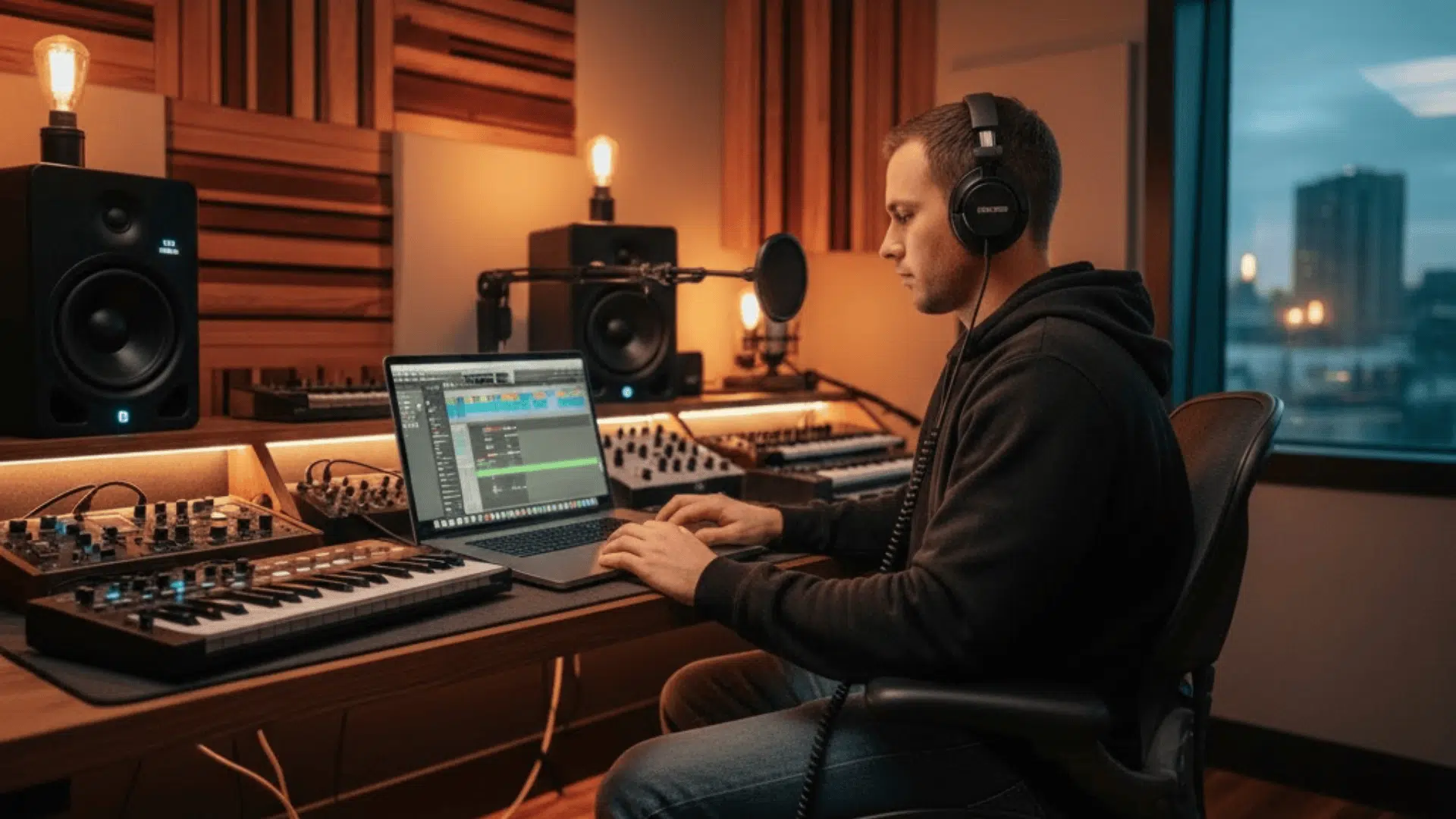
The tools have changed a lot over the past 20 years. You no longer need expensive studio equipment to learn how to produce music. A laptop and basic software can get you started.
The skills stay the same regardless of genre. You need to understand rhythm, melody, and sound design. You also need to know how different elements work together in a mix.
Music production skills open multiple career paths. You can work as a freelance producer creating tracks for artists. You can make beats to sell online through platforms like BeatStars or Airbit.
How Most People Learn Music Production?
Your learning path depends on your learning style; there is no single correct way to learn. The four main paths each have strengths and weaknesses. Understanding them helps you choose what works best for your situation.
- Self-Taught (YouTube, Blogs, Practice): Free tutorials paired with hands-on track-making. Low cost and flexible, but progress can be slower and requires strong discipline.
- Online Courses and Certificates: Structured lessons with clear direction and assignments. Faster guidance than self-teaching, though costs vary and results depend on follow-through.
- Mentorship and Community: Learning through feedback in Discords, forums, or studios. Speeds up growth with critique and shared workflows when guidance is available.
- Formal School Programs: Degrees or certificates with instructors and studio access. Helpful for some paths, but expensive and time-intensive; portfolios matter more than credentials.
Choose the path that makes starting – and staying consistent – easier for you. No matter the route, real progress comes from finishing tracks and learning through doing.
Core Music Production Skills Beginners Need
Every music producer builds on the same fundamental skills, regardless of genre or style. These core abilities matter more than expensive gear or formal training.
-
Ear Training and Critical Listening: Reference pro tracks in your genre often. Compare balance, frequency separation, and space against your mixes. Repetition and A/B listening sharpen decisions.
-
Basic DAW Workflow and Organization: Use shortcuts, clear track names, and color-coding for speed. Sort samples into labeled folders. A clean workflow helps ideas turn into finished songs faster.
-
Simple Music Theory for Arrangement: Learn scales, basic progressions, and sections like verse and chorus. Use tension and release to shape emotion. Just enough theory helps hooks land.
-
Introduction to Sound Design: Understand oscillators, filters, and envelopes, and how they shape tone. Explore one synth deeply before switching. Basics help you make original sounds, not just presets.
-
Rhythm and Timing Fundamentals: Build simple drum patterns and compare them to reference tracks. Train your ear to distinguish tight timing from sloppy. Tempo and groove control energy in any genre.
Most producers develop these skills through hands-on work, not theory alone. Pick one skill each week, focus practice sessions on it, then apply it immediately in your next track.
How ToProduce Your First Song Step By Step
Step 1: Pick A Simple Goal Track
Pick a reference song in your genre and study its structure, section lengths, and instruments.
Map that arrangement in your DAW first, then add your own sounds and processing. This helps beginners finish tracks, build confidence, and get creative later.
Step 2: Build The Foundation
Every track needs drums, harmony, and melody. Build these key parts first, one at a time, to avoid overcrowding and messy mixes.
Start with a simple drum groove, add basic chords for mood, then write a short, catchy hook.
Step 3: Arrange Into A Full Track
Arrangement is choosing when each element plays or stays silent to shape energy. Use your reference track to map standard sections like intro, verse, chorus, bridge, and outro.
Create contrast with energy shifts and smooth transitions using fills, dropouts, and gradual layering.
Step 4: Record Or Program Parts
After arranging, add sounds using MIDI or audio recording. MIDI triggers virtual instruments and is beginner-friendly because you can edit notes and timing and easily swap sounds.
Audio captures real performances but needs more gear and often re-recording to fix mistakes. Aim for clean takes and keep edits simple to preserve a natural feel.
Step 5: Mix The Track (Beginner Version)
Mixing makes elements sit together without clashing. Start simple: set volume levels first, then use EQ only to fix audible problems, and add light compression if needed.
Use subtle reverb and tempo-synced delay to create space without washing out the sound.
Step 6: Master And Export
Mastering is the final polish for share-ready volume and playback. Use a limiter on the master channel, raise gain gently, and avoid heavy limiting.
Aim near -14 LUFS or match your reference. Export WAV (44.1 kHz, 24-bit), plus 320 kbps MP3 if needed.
How People Actually Learn to Produce Music: Real Stories
Successful producers learned through different paths. These stories show how persistence, daily practice, and hands-on work matter more than perfect conditions.
1. Pharrell Williams
I didn’t try to protect a fixed signature sound. “The secret is there is no Neptunes sound. Neptunes sound is just pushing the envelope.” I learned production by experimenting on every record, forcing each beat to feel different so it never went stale. – The FADER
2. Metro Boomin
I treated production like a job, even while I was in college. “I was still in the studio every single day making music. Making beats in the dorm every day all day.” That repetition sharpened my ears and speed, and made my sound dependable. – Red Bull Music Academy Daily
3. Trent Reznor
I got better by taking a studio job for access, then learning after hours. “I started working at the studio. I taught myself engineering and was the guy who did whatever job no one else wanted to do.” Late nights became my production school. – VICE
Each story reveals the same truth: regular practice beats perfect conditions. Apply their lessons by producing consistently with whatever tools you have.
Common Music Production Learning Mistakes to Avoid
Most beginners make the same mistakes when learning music production. Recognizing these patterns early saves you time, money, and frustration.
- Gear Obsession: Expensive gear won’t make you better. Start with your DAW and stock plugins, upgrade only when you hit real limits.
- Tutorial Trap: Watching feels productive, but can stall progress. Use tutorials for specific problems and apply them immediately.
- Perfectionism: Chasing perfect kills momentum. Early tracks will be bad – set short deadlines and finish anyway.
- Learning Alone: Producing solo slows growth. Get feedback from communities to spot issues you’ll miss on your own.
Avoiding these four mistakes accelerates your learning. Focus on practice over gear, doing over watching, finishing over perfecting, and community over isolation.
Start Making Music Today
Learning how to produce music doesn’t require permission or perfect circumstances. You already have enough to begin. The producers you admire all started as beginners.
They made bad tracks. They felt lost. They questioned whether they had what it takes, but they kept going. You now know the common learning paths and which mistakes drain your progress. .
The question isn’t if you can learn music production. The question is: when will you start? Open your DAW tonight. Pick a simple reference track.
Build one eight-bar loop. It won’t sound professional, and that’s fine. But you’ll have something that didn’t exist before. That’s how every producer’s journey begins.
Bookmark this page when you need direction. Then make some noise.