Ever wondered what makes a band sound so impressive? It all starts with the instruments.
From the bright notes of a trumpet to the deep boom of a bass drum, each instrument plays an important role.
But what instruments are in a band exactly? The answer depends on the type of band you’re thinking about.
Concert bands, marching bands, and modern bands each have their own special mix of instruments.
Understanding these instruments helps anyone appreciate music on a much deeper level.
Whether someone wants to join a band or enjoy listening, knowing the instruments makes the experience better.
What Instruments Are in a Band?
Most bands include four main instrument families that work together to create music. Woodwind instruments like flutes, clarinets, and saxophones make sound when air passes through them. Brass instruments such as trumpets, trombones, and tubas bring loud, powerful voices. Percussion instruments like drums and cymbals keep the beat steady and strong.
Concert bands focus on woodwinds, brass, and percussion instruments. Marching bands use similar instruments but add special drums designed for outdoor performances.
Modern bands mix these traditional instruments with electric guitars, basses, and keyboards to create different sounds.
Each instrument family plays an important role. Together, they create the rich, full sound that makes band music so enjoyable to hear.
Main Instrument Families Found in a Band
Understanding band instrumentation starts with learning about the main instrument families. Each family creates different sounds that work together to make great music.
Woodwind Instruments in a Band
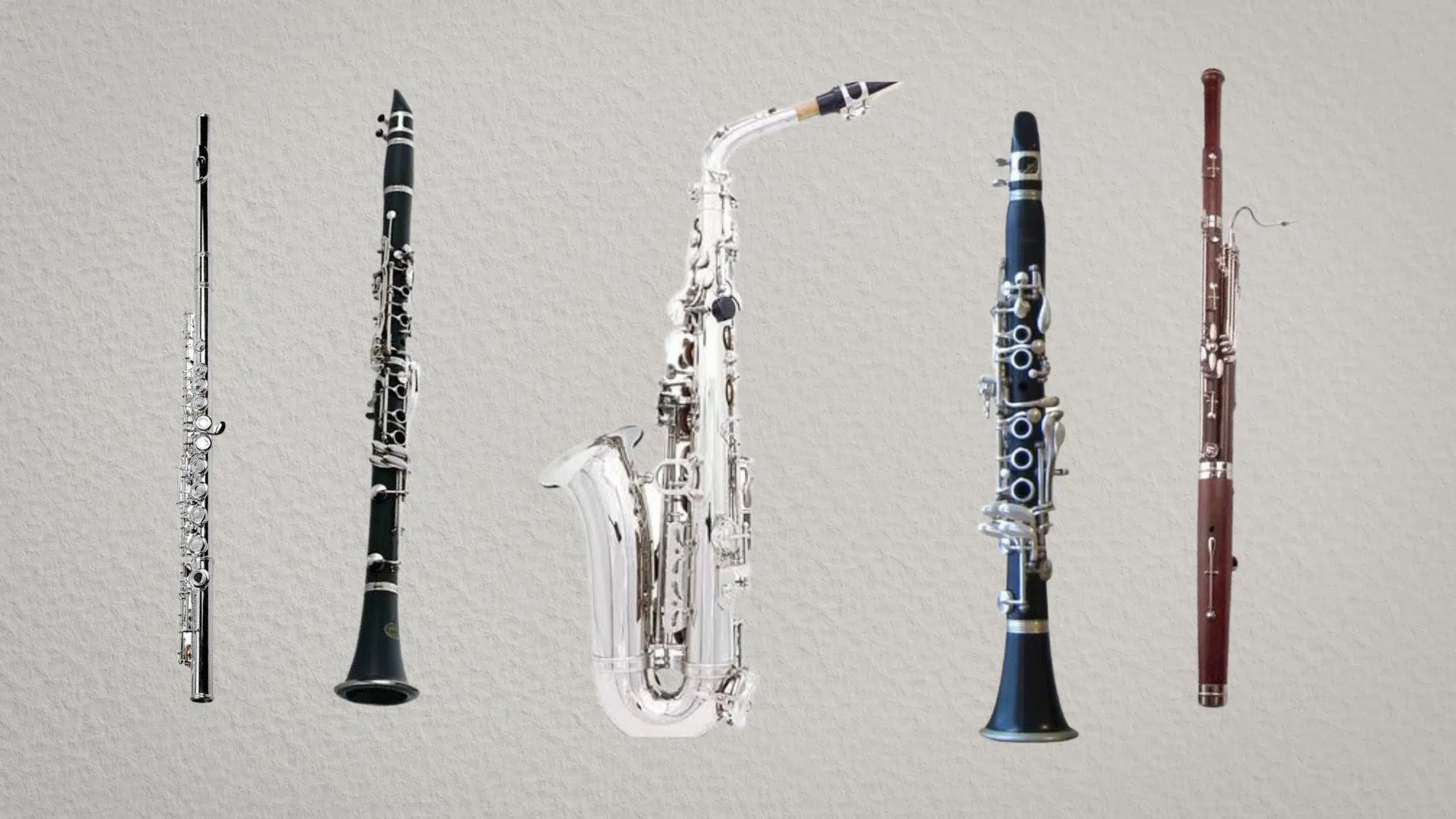
Woodwind instruments make music when air flows through them. A player blows into the mouthpiece, and the air vibrates to create notes.
- Flute – Produces high, bright sounds and often plays the melody. Made of metal but counts as a woodwind.
- Clarinet – Has a smooth, warm tone and can play both high and low notes. Many bands use several clarinets.
- Saxophone – Comes in different sizes with a bold, jazzy sound. Popular in both concert and marching bands.
- Oboe – Creates a sweet, piercing tone. This instrument helps the whole band tune up before concerts.
- Bassoon – The largest woodwind that plays deep, low notes. Adds richness and depth to the band’s sound.
Woodwinds handle both melody and harmony in a band. They carry the main tune while also filling in background notes. This combination makes the music feel full and interesting.
Brass Instruments in a Band
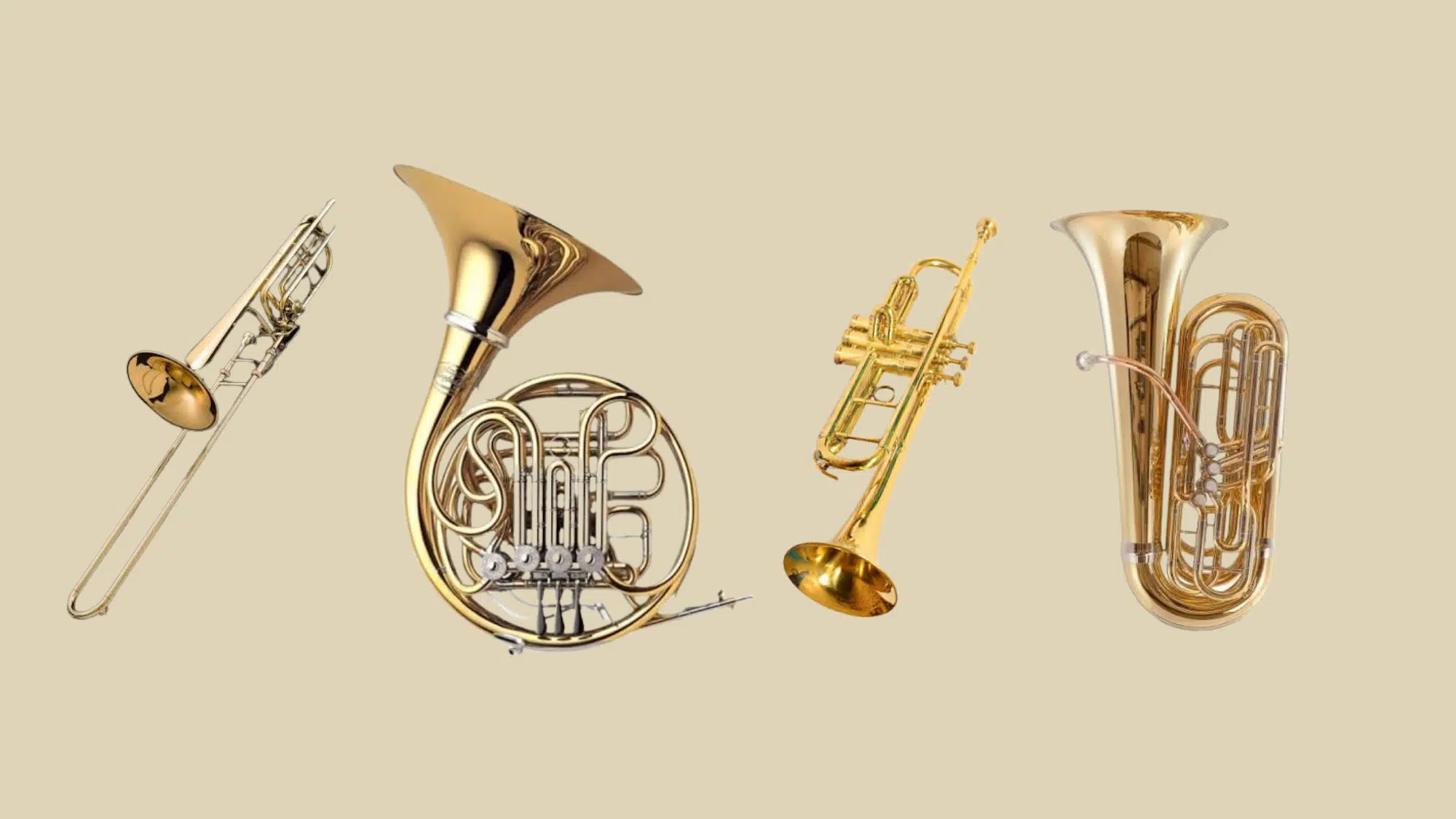
Brass instruments are the powerhouse of any band. Players buzz their lips into a mouthpiece to create sound. These instruments can play loud enough to fill large spaces.
- Trumpet – The highest-sounding brass instrument with a bright, clear tone. Trumpets often play fanfares and exciting melodies that grab attention.
- Trombone – Uses a slide instead of valves to change notes. Trombones have a rich, smooth sound and can play both high and low.
- French Horn – Has a warm, mellow tone that blends beautifully with woodwinds. The bell faces backward, which creates its unique sound.
- Tuba – The largest and lowest brass instrument. Tubas provide the deep foundation that supports the entire band.
Brass instruments bring power, volume, and depth to a band. They can play softly and gently or loudly and boldly. Brass instruments are always part of any band’s core lineup.
Percussion Instruments in a Band
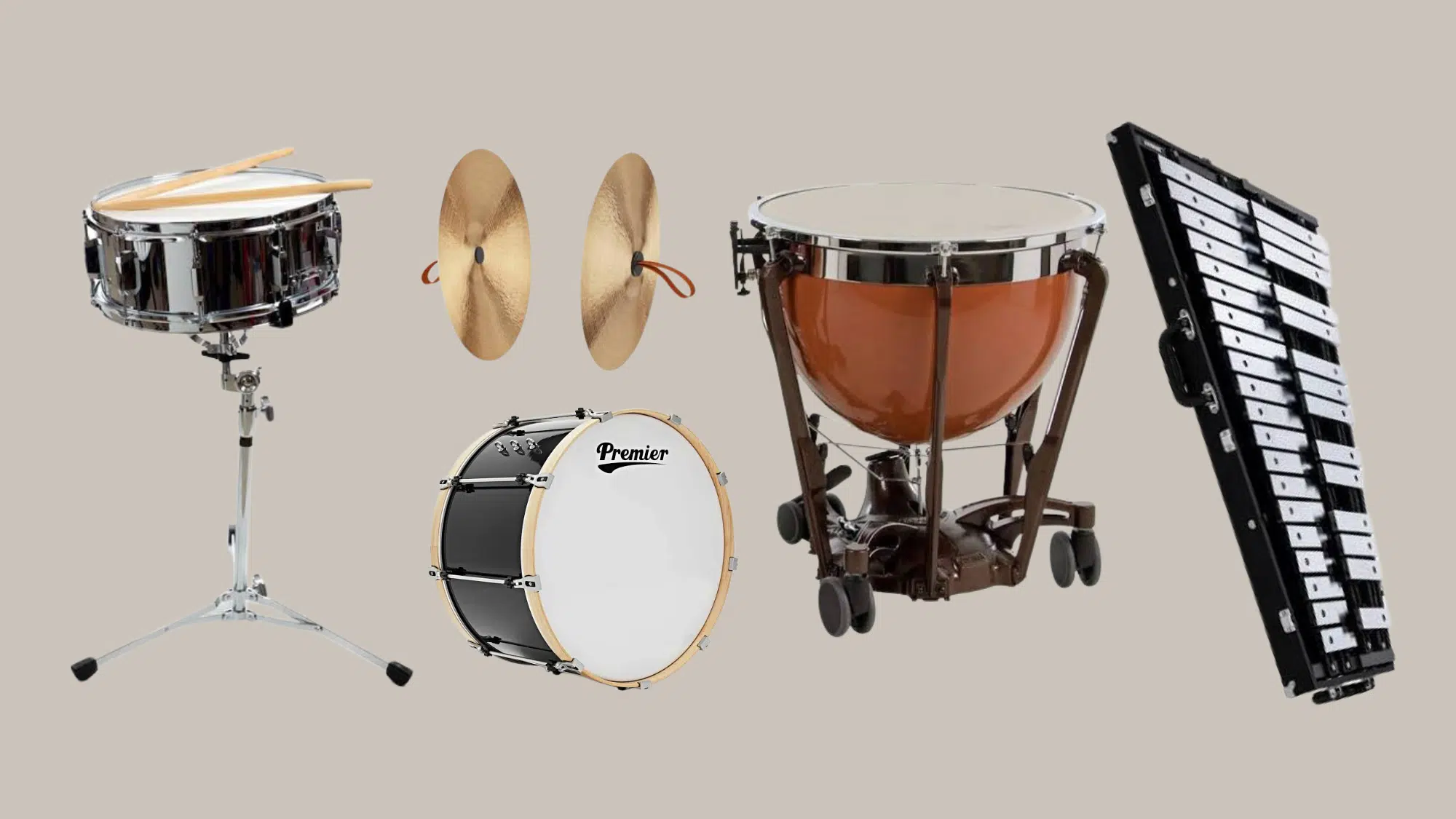
Percussion instruments create sound when struck, shaken, or scraped. They form the rhythmic backbone that keeps everyone playing together.
- Snare Drum – Has a sharp, crisp sound with wires underneath that rattle. Snare drums play rolls and beats that drive the music forward.
- Bass Drum – Produces deep, booming sounds that you can feel in your chest. It marks essential beats and adds drama.
- Cymbals – Metal plates that crash together or get struck with sticks. Cymbals add excitement and mark significant moments in songs.
- Timpani – Large kettle drums that can be tuned to different notes. They add thunder and power to dramatic pieces.
- Mallet Instruments – Xylophones and marimbas use wooden bars that players strike with mallets. These instruments play melodies and harmonies just like other instruments.
Percussion provides the rhythmic foundation every band needs. Without percussion, bands would lack steady timing and energy. The beat keeps all musicians playing together as one group.
Instruments in a Concert Band
Concert bands perform indoors and feature woodwinds (flutes, clarinets, saxophones, oboes, bassoons), brass (trumpets, French horns, trombones, tubas), and percussion (drums, cymbals, timpani, xylophones).
Beginner bands start with basic instruments like flutes, clarinets, and trumpets, while advanced bands include all instrument types with 60 to 80 musicians.
The main difference between concert bands and orchestras is that orchestras focus on string instruments like violins and cellos, while concert bands emphasize woodwinds and brass instead.
This instrumentation helps explain the unique sound concert bands create. Concert bands offer a powerful blend of wind and percussion instruments that fill concert halls with rich, layered music.
Instruments in A Marching Band
In a marching band, the main groups are brass, woodwinds, and percussion.
Brass instruments include trumpets, trombones, baritones, mellophones, and the sousaphone, which is used instead of a tuba because it is easier to carry while marching.
Woodwinds often include flutes, piccolos, clarinets, and saxophones.
The drumline is made up of snare drums, tenor drums, bass drums, and cymbals.
Some concert band instruments, like oboes, bassoons, and concert tubas, are not used because they are too fragile, too quiet, or too hard to march with.
Marching Band Vs Concert Band Instruments
| Marching Band | Concert Band |
|---|---|
| Sousaphone | Tuba |
| Mellophone | French Horn |
| Limited woodwinds | Full woodwind section |
| Designed for outdoor use | Designed for indoor performance |
What Instruments are in a Modern Band or Pop Band
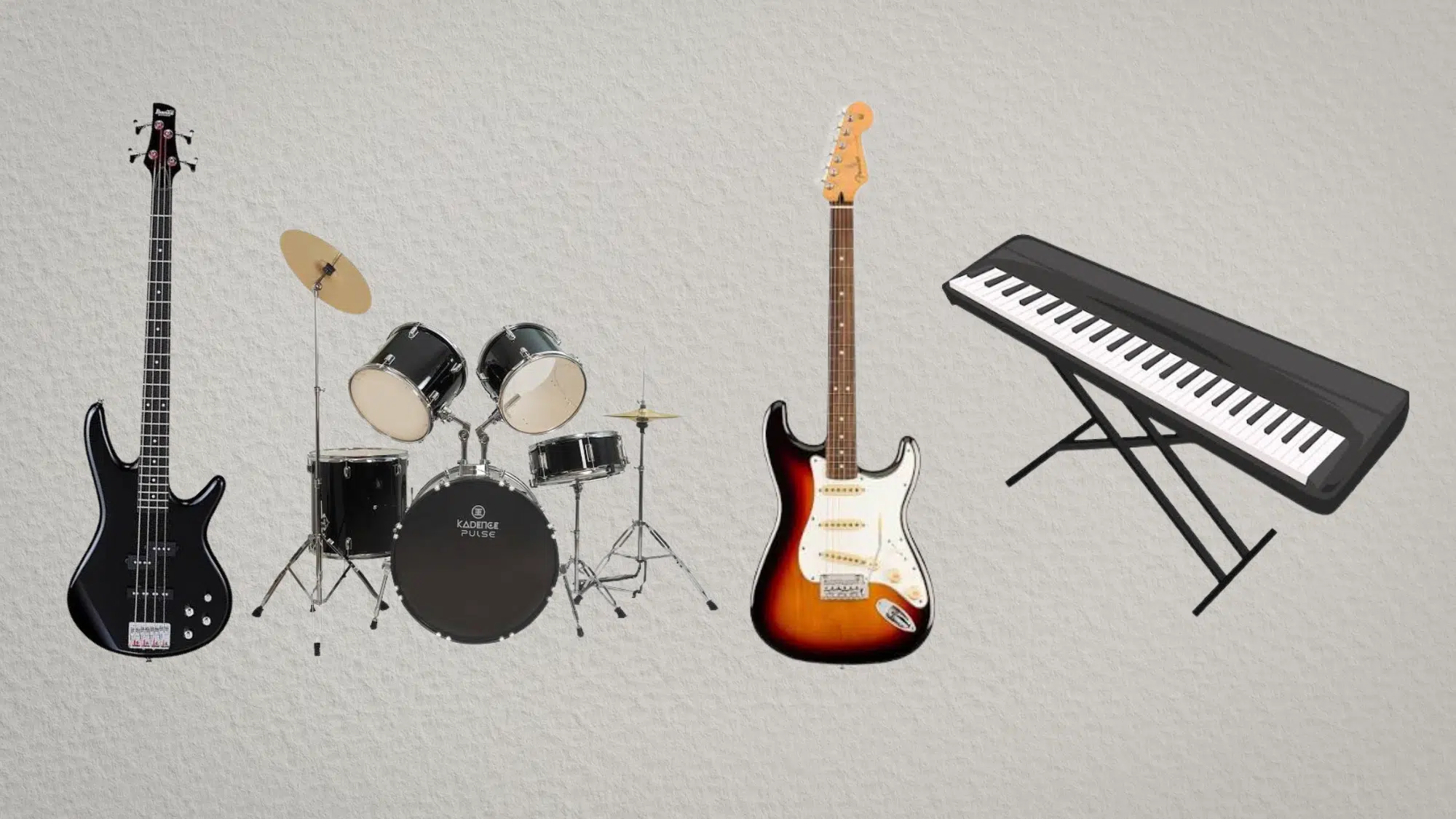
When thinking about bands, modern or pop bands typically come to mind first. These bands focus on amplified sound and rhythm.
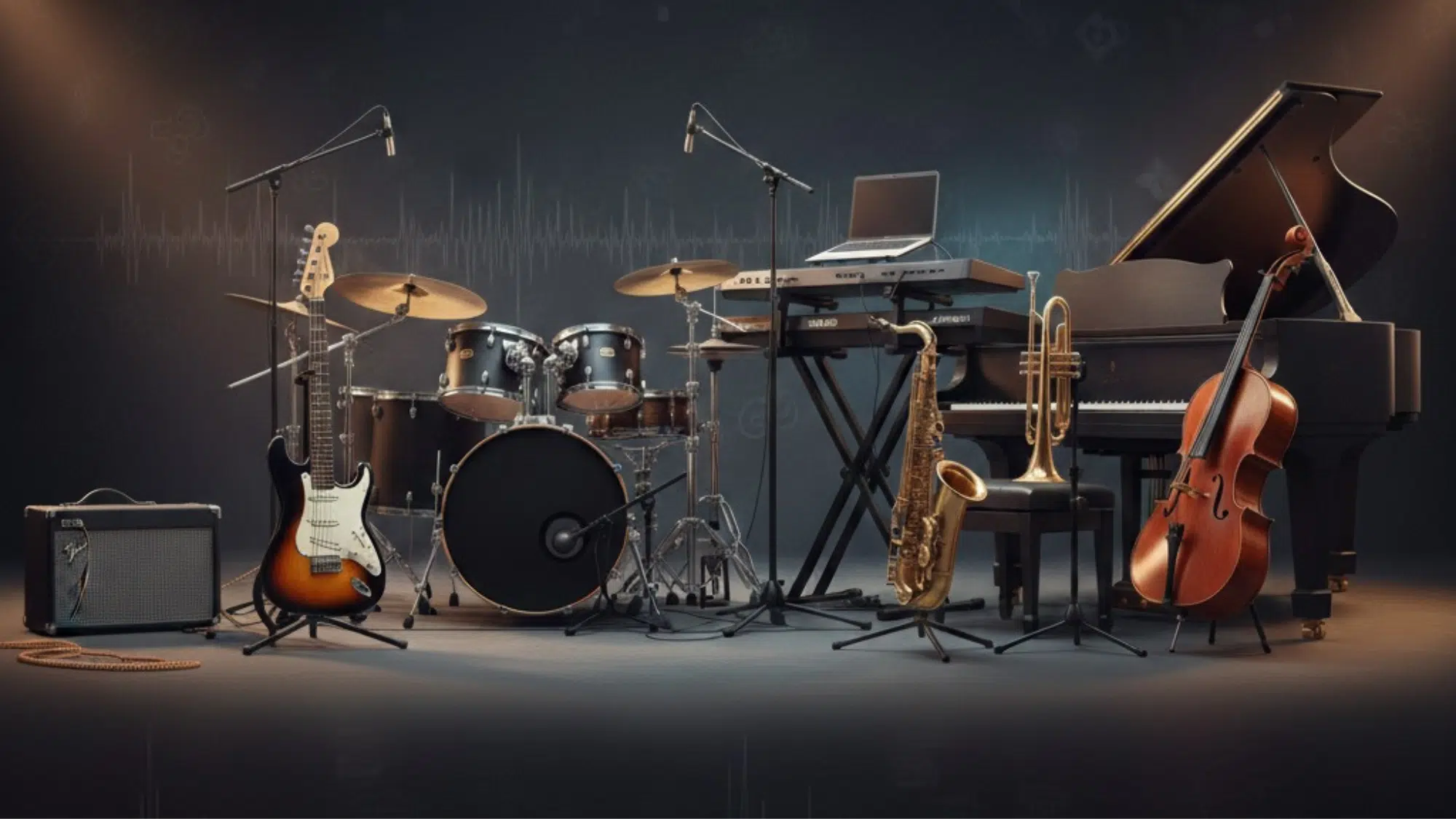
Most modern bands include an electric guitar for melodies and solos, a bass guitar for low notes, a keyboard for chords and effects, and a drum kit to keep the beat.
Some bands also add optional instruments like saxophone, violin, or synthesizers to create a unique sound.
Unlike marching or concert bands, modern bands use electronic instruments and speakers to perform indoors or on stage.
These bands represent the most common ensemble type today. These bands use electronic and amplified instruments to create popular music.
- Electric Guitar – Plays melodies, chords, and solos using an amplifier
- Bass Guitar – Provides low sounds that support the rhythm
- Keyboard – Adds chords, melodies, and special effects
- Drum Kit – Keeps the beat and controls the tempo
- Optional Instruments – Saxophone, violin, or synthesizers add extra sound and style.e
How Band Instruments Are Chosen
Band instrumentation depends on several important factors. Different bands choose instruments based on their goals and setting.
Music style matters because rock, pop, marching, and concert bands all use different sounds.
Band size also plays a role, since smaller bands use fewer instruments while larger bands use sections.
The performance setting is essential, as outdoor bands need louder instruments than indoor bands.
School bands often choose instruments that help students learn basics, while professional bands choose instruments for a specific sound.
Many bands include beginner-friendly instruments like clarinet, trumpet, keyboard, or drums because they are easier to learn and widely used.
Differences Between Band Instruments and Orchestra Instruments
Many people also want to know how bands differ from orchestras. While some instruments are shared, others are not.
| Feature | Band Instruments | Orchestra Instruments |
|---|---|---|
| Overlapping instruments | Flute, clarinet, trumpet, trombone, percussion | Flute, clarinet, trumpet, trombone, percussion |
| Main instrument groups | Brass, woodwinds, percussion | Strings, woodwinds, brass, percussion |
| Instruments unique to bands | Saxophone, baritone, euphonium, sousaphone | Violin, viola, cello, double bass |
| Use of string instruments | Usually not included | The primary focus of the orchestra |
| Sound purpose | Loud and clear, often for large spaces | Blended and balanced for concert halls |
Final Thoughts
Understanding what instruments are in a band helps explain how different bands create their sound.
Marching bands use strong, portable instruments, concert bands focus on balance and blend, and modern bands rely on amplified instruments.
Each type of band offers unique ways to learn and perform music. Choosing the right instrument can build confidence, teamwork, and creativity at any age.
Whether learning, teaching, or joining a band, trying out these instruments opens the door to new skills and experiences.
Which instrument sounds like the right fit? Share thoughts in the comments, or bookmark this page to know about band instruments again.